
What happens when you die?
This website draws on the words of Jesus, the Catechism of the Catholic Church, and prominent Catholic teachers to help us understand what happens at death and how we can prepare for it today.
My hope is that this website can help you with your walk with Christ and his Church.
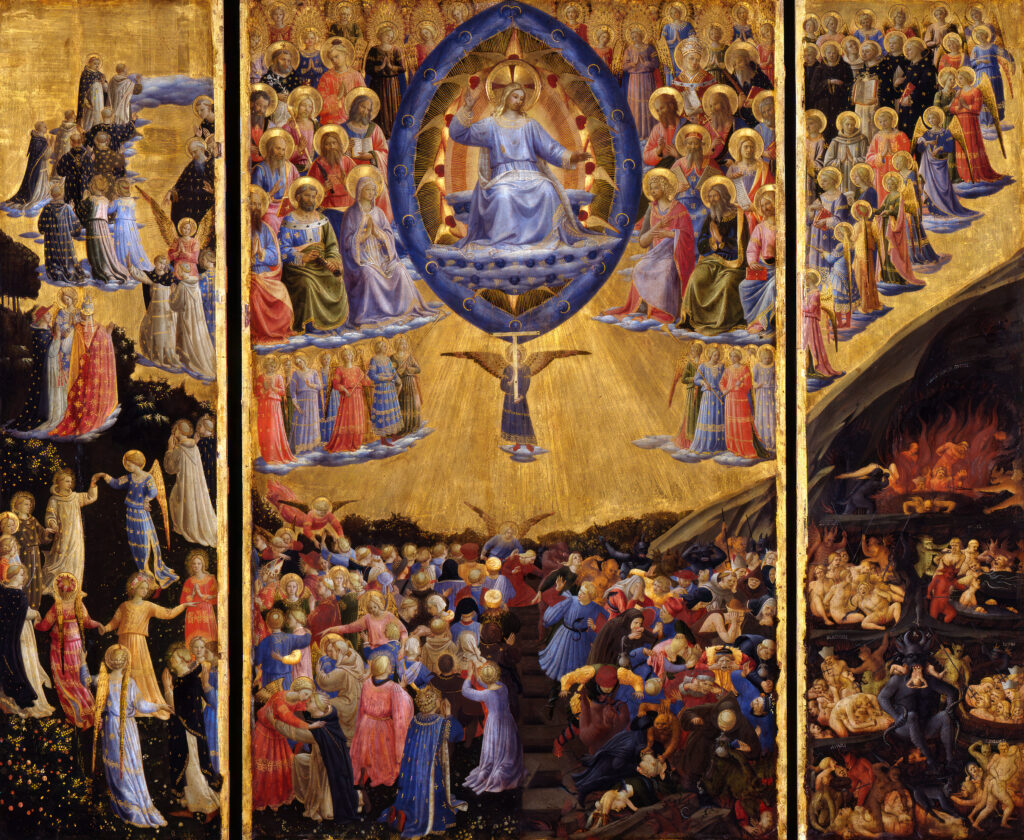
Remember Your Death!
 Reflecting on my death helps me truly live.
It narrows my focus to the essentials: God, family, health, and the mission Christ has for me. When I look at life through the lens of eternity, the minor frustrations of the day fade away. I can live with radical freedom because Christ has defeated death, sin and Satan.
God is love. He has a deep and merciful love for each one his children. And he has given us the blueprint of how to spend eternity with him.
Listed below are the quick links to the major sections of this website:
 The best place to start: What Christ says about salvation and how to follow him as a disciple.
To grasp the beauty of what Christ and His Church teach about heaven, the Catechism is an indispensable treasure trove of wisdom.
A summary of salvation from three teachers of the Catholic faith.
What does “living in a state of grace” mean for a Catholic today?
Father John Riccardo has many fantastic 30-40 minutes talks on how to grow closer to Jesus Christ.
And finally the resource page of this website is a listing of the best resources I have found on my salvation knowledge journey to date.
Christ's words about salvation in Sacred Scripture
Scripture quotations are taken from The New American Bible Revised Edition (NABRE)
Baptism
- Jesus answered, “Amen, amen, I say to you, no one can enter the kingdom of God without being born of water and Spirit.” (John 3:5)
- Then Jesus approached and said to them, “All power in heaven and on earth has been given to me. Go, therefore, and make disciples of all nations, baptizing them in the name of the Father, and of the Son, and of the holy Spirit, teaching them to observe all that I have commanded you. And behold, I am with you always, until the end of the age.” (Matthew 28:18-20)
Faith
- Jesus said to him, “I am the way and the truth and the life. No one comes to the Father except through me.” (John 14:6)
- Then he said to all, “If anyone wishes to come after me, he must deny himself and take up his cross daily and follow me. (Luke 9:23)
Eucharist
- “Amen, amen, I say to you, whoever believes has eternal life. I am the bread of life. Your ancestors ate the manna in the desert, but they died; this is the bread that comes down from heaven so that one may eat it and not die. I am the living bread that came down from heaven; whoever eats this bread will live forever; and the bread that I will give is my flesh for the life of the world.” (John 6:47-51)
- While they were eating, Jesus took bread, said the blessing, broke it, and giving it to his disciples said, “Take and eat; this is my body.” Then he took a cup, gave thanks, and gave it to them, saying, “Drink from it, all of you, for this is my blood of the covenant, which will be shed on behalf of many for the forgiveness of sins. (Matthew 26:26-28)
Discipleship
- Then he said to all, “If anyone wishes to come after me, he must deny himself and take up his cross daily and follow me. For whoever wishes to save his life will lose it, but whoever loses his life for my sake will save it. What profit is there for one to gain the whole world yet lose or forfeit himself? Whoever is ashamed of me and of my words, the Son of Man will be ashamed of when he comes in his glory and in the glory of the Father and of the holy angels.” (Luke 9:23-26)
- “Watch, therefore; you do not know when the lord of the house is coming, whether in the evening, or at midnight, or at cockcrow, or in the morning. May he not come suddenly and find you sleeping. What I say to you, I say to all: ‘Watch!’” (Mark 13:35-37)
- You also must be prepared, for at an hour you do not expect, the Son of Man will come. (Luke 12:40)
Mercy
- And when he had said this, he breathed on them and said to them, “Receive the holy Spirit. Whose sins you forgive are forgiven them, and whose sins you retain are retained.” (John 20:22-23)
- If you forgive others their transgressions, your heavenly Father will forgive you. But if you do not forgive others, neither will your Father forgive your transgressions. (Matthew 6:14-15)
Love
- I give you a new commandment: love one another. As I have loved you, so you also should love one another. This is how all will know that you are my disciples, if you have love for one another.” (John 13:34-35)
- Do not be afraid any longer, little flock, for your Father is pleased to give you the kingdom. (Luke 12:32)
- Jesus replied, “The first is this: ‘Hear, O Israel! The Lord our God is Lord alone! You shall love the Lord your God with all your heart, with all your soul, with all your mind, and with all your strength. ’The second is this: ‘You shall love your neighbor as yourself.’ There is no other commandment greater than these.” (Mark 12:29-31)
Our Cooperation
- “Enter through the narrow gate; for the gate is wide and the road broad that leads to destruction, and those who enter through it are many. How narrow the gate and constricted the road that leads to life. And those who find it are few.” (Matthew 7:13-14)
- When the Son of Man comes in his glory, and all the angels with him, he will sit upon his glorious throne, and all the nations will be assembled before him. And he will separate them one from another, as a shepherd separates the sheep from the goats. He will place the sheep on his right and the goats on his left. Then the king will say to those on his right, ‘Come, you who are blessed by my Father. Inherit the kingdom prepared for you from the foundation of the world. For I was hungry and you gave me food, I was thirsty and you gave me drink, a stranger and you welcomed me, naked and you clothed me, ill and you cared for me, in prison and you visited me.’ (Matthew 25:31-36)
- But the one who perseveres to the end will be saved. (Matthew 24:13)
Selections from the Catechism of the Catholic Church
From the Catechism of the Catholic Church, Second Edition
183 Faith is necessary for salvation. The Lord himself affirms: “He who believes and is baptized will be saved; but he who does not believe will be condemned” (Mk16:16).
169 Salvation comes from God alone; but because we receive the life of faith through the Church, she is our mother: “We believe the Church as the mother of our new birth, and not in the Church as if she were the author of our salvation.” Because she is our mother, she is also our teacher in the faith.
1407 The Eucharist is the heart and the summit of the Church’s life, for in it Christ associates his Church and all her members with his sacrifice of praise and thanksgiving offered once for all on the cross to his Father; by this sacrifice he pours out the graces of salvation on his Body which is the Church.
1060 At the end of time, the Kingdom of God will come in its fullness. Then the just will reign with Christ forever, glorified in body and soul, and the material universe itself will be transformed. God will then be “all in all” (1 Cor 15:28), in eternal life.
1468 “The whole power of the sacrament of Penance consists in restoring us to God’s grace and joining us with him in an intimate friendship.” Reconciliation with God is thus the purpose and effect of this sacrament. For those who receive the sacrament of Penance with contrite heart and religious disposition, reconciliation “is usually followed by peace and serenity of conscience with strong spiritual consolation.” Indeed the sacrament of Reconciliation with God brings about a true “spiritual resurrection,” restoration of the dignity and blessings of the life of the children of God, of which the most precious is friendship with God.
2020 Justification has been merited for us by the Passion of Christ. It is granted us through Baptism. It conforms us to the righteousness of God, who justifies us. It has for its goal the glory of God and of Christ, and the gift of eternal life. It is the most excellent work of God’s mercy.
1035 The teaching of the Church affirms the existence of hell and its eternity. Immediately after death the souls of those who die in a state of mortal sin descend into hell, where they suffer the punishments of hell, “eternal fire.” The chief punishment of hell is eternal separation from God, in whom alone man can possess the life and happiness for which he was created and for which he longs.
234 The mystery of the Most Holy Trinity is the central mystery of Christian faith and life. It is the mystery of God in himself. It is therefore the source of all the other mysteries of faith, the light that enlightens them. It is the most fundamental and essential teaching in the “hierarchy of the truths of faith.” The whole history of salvation is identical with the history of the way and the means by which the one true God, Father, Son, and Holy Spirit, reveals himself to men “and reconciles and unites with himself those who turn away from sin.”
1811 It is not easy for man, wounded by sin, to maintain moral balance. Christ’s gift of salvation offers us the grace necessary to persevere in the pursuit of the virtues. Everyone should always ask
for this grace of light and strength, frequent the sacraments, cooperate with the Holy Spirit, and follow his calls to love what is good and shun evil.
161 Believing in Jesus Christ and in the One who sent him for our salvation is necessary for obtaining that salvation. “Since ‘without faith it is impossible to please [God]’ and to attain to the fellowship of his sons, therefore without faith no one has ever attained justification, nor will anyone obtain eternal life ‘but he who endures to the end.’”
Salvation summaries from three prominent Catholics:

Father Mike Schmitz
I place my trust and surrender my intellect and my will to Jesus Christ who has died and has risen from the dead.
We are saved by grace (unmerited gift), through faith (I place my trust in God) working itself out in love.
Faith without works is dead.
Faith is connected to works of love.

Bishop Robert Barron
There is no salvation apart from Christ. Grace is a free gift. When I cooperate with grace it is not the old I who lives, but Christ who now lives in me.
Love is willing the good of the other.
How are we saved? By accepting grace through faith, then willing the good of the other poured out in love.

Jimmy Akin Senior Apologist at Catholic Answers
That’s what you need to do if you want to come to God and be saved: Repent, have faith, and be baptized.
To turn away from God and commit mortal sin is the opposite of repenting.
Jesus empowered his ministers to forgive or retain sins.That’s what you need to do. To come to God and be saved, you need to repent, have faith, and be baptized. If you commit mortal sin, you need to repent, have faith, and go to confession.
From “Father Kerper Explains” article – a Diocese of Manchester NH Publication
“What does it mean to be in a “state of grace”?
Your great question leads us to examine two crucial matters often overlooked. First, how should Christians understand their human condition on earth? And second, what is the connection between the earthly lives of human beings and their only possible outcomes: endless happiness and total fulfillment in eternal life (Heaven) or the perpetual anguish caused by freely choosing something other than God (Hell)?
Let’s begin by correcting one terrible — but very common — misunderstanding. Many people define the “state of grace” as the absence of mortal sin. Yes, grave sin is incompatible with the “state of grace,” but this minimalistic understanding is akin to saying, “I’ve been hugely successful in life because I’ve never gone to jail.” There’s more to life than not getting convicted of crimes; and there’s much more to the “state of grace” than avoiding mortal sin.
To grasp the beauty of living in the “state of grace,” we need a clear definition of “grace.” Simply — and shockingly — put, “grace” is God! Allow me to refine this idea: “Grace” is God in that God freely communicates himself to human beings, thereby enabling human beings to become like God. Grace actually transforms human beings into “gods” by adoption. This sounds bizarre, even heretical, but the New Testament boldly proposes this idea and many Greek-speaking Church Fathers spoke of the “deification” of human beings.
How does this work? Through sanctifying grace, which is uncreated, God draws close to us, even to the point of union, somewhat like the marriage of a man and woman. The presence of this “grace” — God’s own life — restores us to God’s own “image and likeness,” thereby empowering us to be become truly “God-like,” notably through mercy and love.
Moreover, “grace” draws us into the life of the Trinity. When, we pray, for example, we always pray in union with Christ, who speaks to the Father ceaselessly.
This “state of grace,” which begins on earth at the moment of Baptism, extends forever into eternity. Here we find the essential connection between grace and liberation from death. By nature, human beings all eventually die. There’s no escape. However, when God touches us through “grace” we begin to share in his qualities, one of which is immortality. Being in the “state of grace,” then, liberates us from eternal death.
Now, let’s consider the opposite condition: A person who falls out of the “state of grace” through mortal sin loses the necessary linkage with God and is necessarily excluded from the joy of eternal life.
This seems horribly unfair, so we need to understand “mortal sin.” This term refers to a free, conscious, informed, consensual decision to do something gravely wrong. It is a choice against the goodness of God. Note well: God does not move away from the sinner; rather the sinner, through his or her free act, blocks off God’s life-giving grace. This, of course, kills the relationship with God, who is the source and preserver of life.
Now, to the second part of your question: How do I know whether I’m in the “state of grace”? Frankly, we can never know this with absolute certainty. Nor should we conclude that any other person is not in the “state of grace.”
While we can’t have certainty, the regular practice of Confession is an enormous help. A frequent, thorough, and brutally honest examination of conscience will compel us to see habits, attitudes, and specific serious sins that pull us away from God’s goodness, thereby possibly blocking God’s life-giving grace.
But, as I mentioned at the outset, the “state of grace” is not just the absence of sin; it’s also the amazing opportunity to live fully as a “deified” child of God, sharing fully in God’s life now and forever.
Leon Bloy, the great French Catholic writer who died in 1917, once said, “The only true tragedy is not to become a saint.”
Surely, this tragedy happens if we fall from the “state of grace.” But it is also tragic to remain just in the “state of grace” without fulfilling all the amazing possibilities that grace provides.